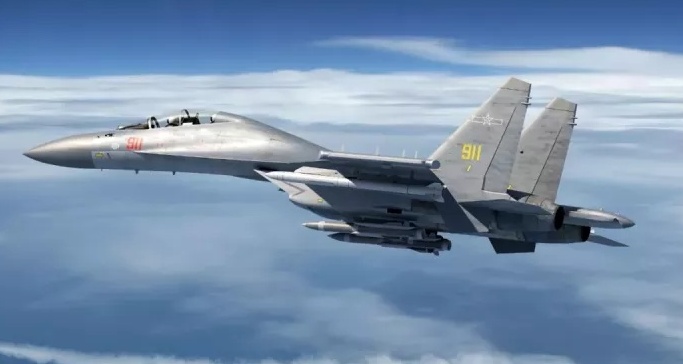

Modern air combat is no longer decided in close-range dogfights, but far beyond visual range, often before pilots even know they are being tracked. In this battlespace, long-range missiles define aerial advantage.
China’s PL-17 is built to push that envelope further, targeting high-value assets like tankers, surveillance platforms, and early warning aircraft under a “kill the eyes and ears first” doctrine.
To understand its impact, we need to look at what it is, how it emerged, and why it matters in today’s airpower competition.
At a Glance
| Category: | Details: |
| Type | Very long-range air-to-air missile |
| Role | High-value airborne target interception |
| Operator | People’s Liberation Army Air Force (PLAAF) |
| Length | Approximately 6 meters (19.6 feet) |
| Diameter | Estimated at 30 centimeters (11.8 inches) |
| Range | Estimated at 300 to 500 kilometers (186 to 311 miles) |
| Maximum Speed | Around Mach 4 (4,939 kilometers/3,069 miles per hour) to 6 (7,409 kilometers/4,603 miles per hour) |
| Propulsion | Dual-pulse solid rocket motor |
| Launch Platform | Fighter aircraft, notably J-16 and other PLAAF multirole fighters |
| Engagement Style | Beyond-visual-range, standoff interception |
| Primary Target Set | High-value airborne assets (AWACS, tankers, ISR platforms) |
| Flight Profile | Lofted trajectory with high-altitude cruise and terminal dive |
What Is the PL-17?
The PL-17 is a long-range air-to-air missile developed by China and believed to be operated by the People’s Liberation Army Air Force.
Designed to target high-value support aircraft, including AEW&C platforms, aerial refueling tankers, and reconnaissance assets, it extends engagement deep into the battlespace.
Developed under the Aviation Industry Corporation of China, it builds on earlier systems like the PL-12 and PL-15, using extended range and advanced guidance to threaten the aircraft that enable modern air operations.
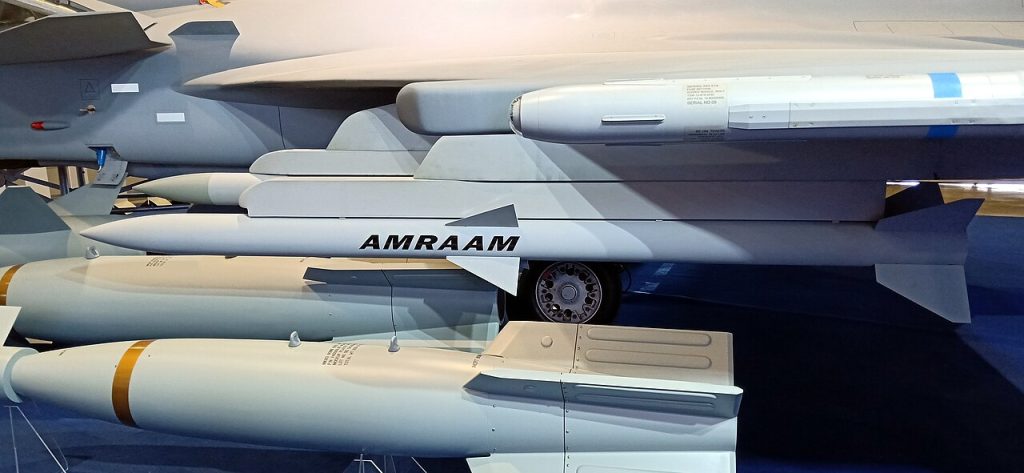
Compared to widely used Western missiles like the AIM-120 AMRAAM, the PL-17 prioritizes extreme range and the ability to target high-value support aircraft, rather than close-range engagements against maneuvering fighters.
It also reflects a different design philosophy than newer systems such as the AIM-260 JATM, which aim to balance range with broader air-to-air combat roles.
Development and Strategic Context
The PL-17 emerged from Beijing’s broader push to expand the reach of its air combat systems beyond traditional visual-range constraints.
As regional air operations increasingly depend on support aircraft acting as force multipliers, these platforms became high-value targets in any potential conflict scenario.
While exact development timelines remain classified, the missile is widely associated with China’s shift toward anti-access/area denial strategies.
In this context, the PL-17 is designed to push adversary aircraft farther from contested airspace by threatening the aircraft that enable long-range operations.
Design and Capability Profile
The PL-17 is a large, long-range missile featuring advanced propulsion and guidance systems. Unlike shorter-range air-to-air missiles, its design prioritizes endurance, high-altitude performance, and long-distance tracking.
Key Characteristics
- Very long engagement range (exact figures remain undisclosed)
- Large airframe designed for extended propulsion and fuel capacity
- Likely active radar and/or multi-mode seeker systems
- Optimized for high-value, non-maneuvering airborne targets
Rather than focusing on close-range agility, the PL-17 is built for reach, persistence, and target prioritization.
How the PL-17 Works
Launch and Mid-Course Flight
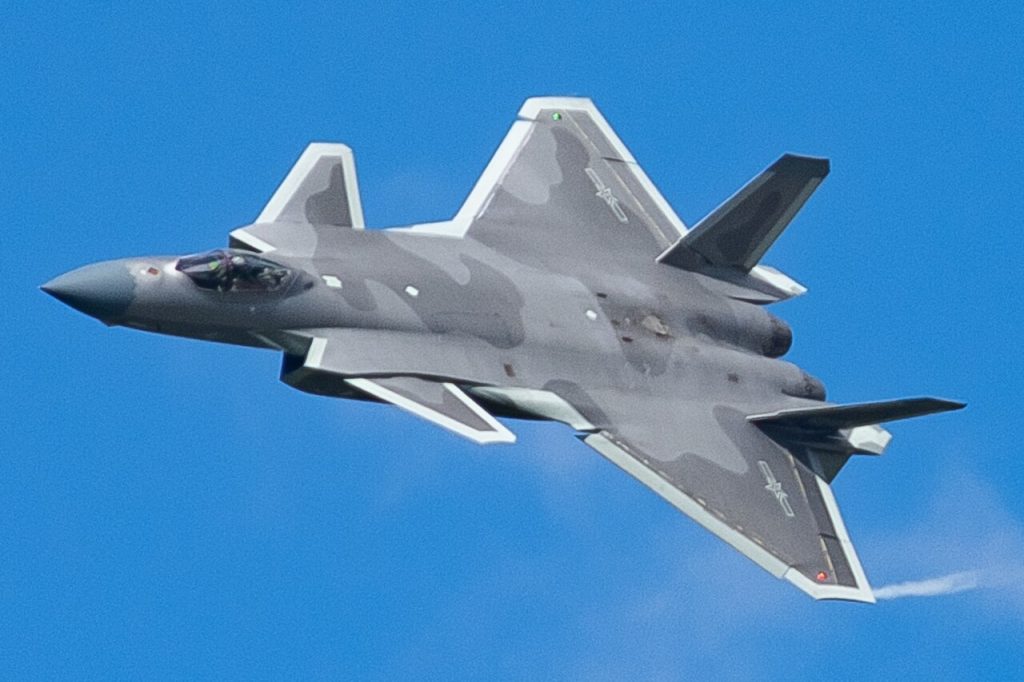
Once launched from platforms such as the J-16 or potentially the J-20, the PL-17 uses a high-energy propulsion system to rapidly extend its range. It climbs to optimal altitude, reducing drag and maximizing reach.
Guidance and Targeting
The missile is believed to rely on a combination of inertial navigation and mid-course updates, likely supported by offboard targeting data.
This means it does not need to rely solely on the launching aircraft’s radar, allowing it to engage targets beyond line-of-sight.
Terminal Engagement
In its final phase, the PL-17 activates its onboard seeker to home in on the target. Its design prioritizes destroying or disabling large, less maneuverable aircraft that are critical to battlefield coordination and logistics.
Strengths
- Extremely long reach against support aircraft
- Strategic disruption capability, targeting force enablers rather than fighters
- Networked targeting potential, enabling beyond-visual-range engagement
- Deterrence value in contested airspace scenarios
Limitations
- Specialized role, less effective against agile fighters at close range
- Large size, limiting internal carriage options on stealth platforms
- High dependence on targeting networks, requiring robust sensor integration
- Unverified performance data, with much of its capability based on open-source assessment
Operational Context and Use
The PL-17 is believed to be part of China’s broader effort to extend air denial capabilities deep into contested regions such as the South China Sea and beyond the First Island Chain.
By threatening tanker and surveillance aircraft at long distances, it complicates how opposing air forces sustain operations over extended ranges.
This reflects a broader shift in air warfare: instead of defeating enemy fighters directly, the goal is to degrade the systems — sensors, refueling, command and control — that make those fighters effective.

Future Outlook
As air combat continues to evolve toward networked, sensor-driven warfare, missiles like the PL-17 highlight a growing emphasis on reach and system disruption over traditional dogfighting metrics.
Future developments will likely deepen its integration into broader kill-chain networks, improving real-time targeting and engagement capability.
Much about the PL-17 remains undisclosed, but its purpose is not. It is designed to hold the most critical nodes of an air force at risk, reshaping not just how aircraft fight, but how they operate in contested airspace at all.