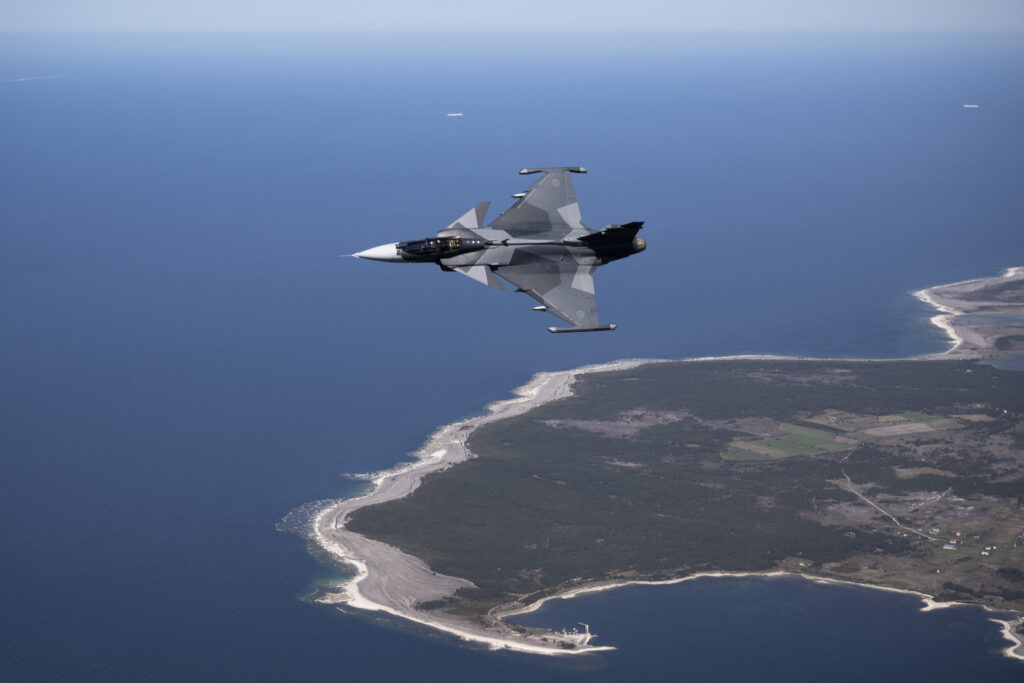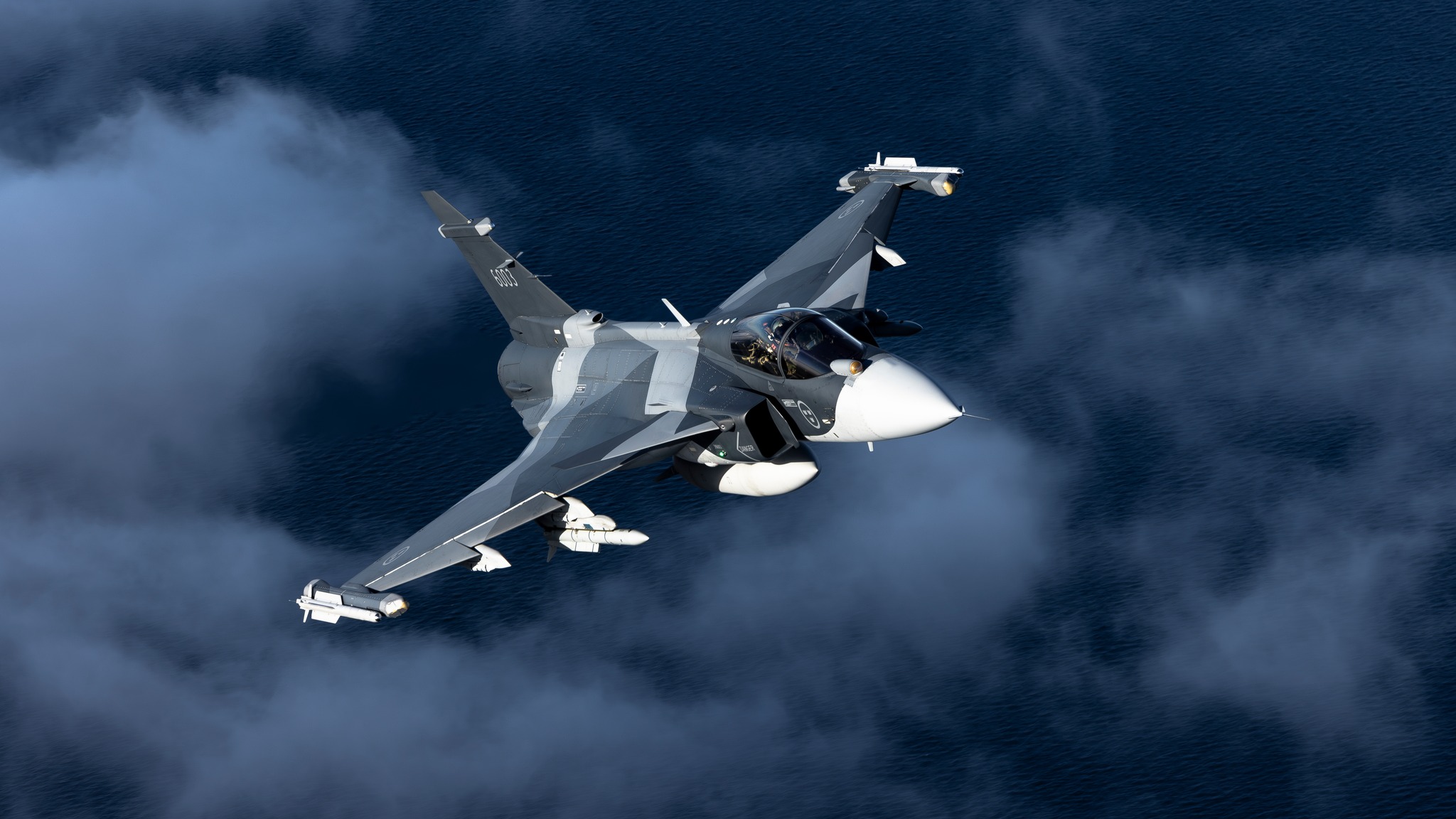

When Sweden faced the challenge of defending its skies during the Cold War with limited resources, it needed a fighter that could combine agility, affordability, and advanced technology.
The result was the JAS 39 Gripen, a multi-role fighter designed to perform air-to-air, air-to-ground, and reconnaissance missions with unmatched flexibility.
The Gripen has become a symbol of Swedish ingenuity in aerospace engineering, proving that smaller air forces can operate cutting-edge jets with global relevance.
Discover how the Gripen works, its evolution, and why it remains a cornerstone of modern air defense for several nations.
What is the JAS 39 Gripen?
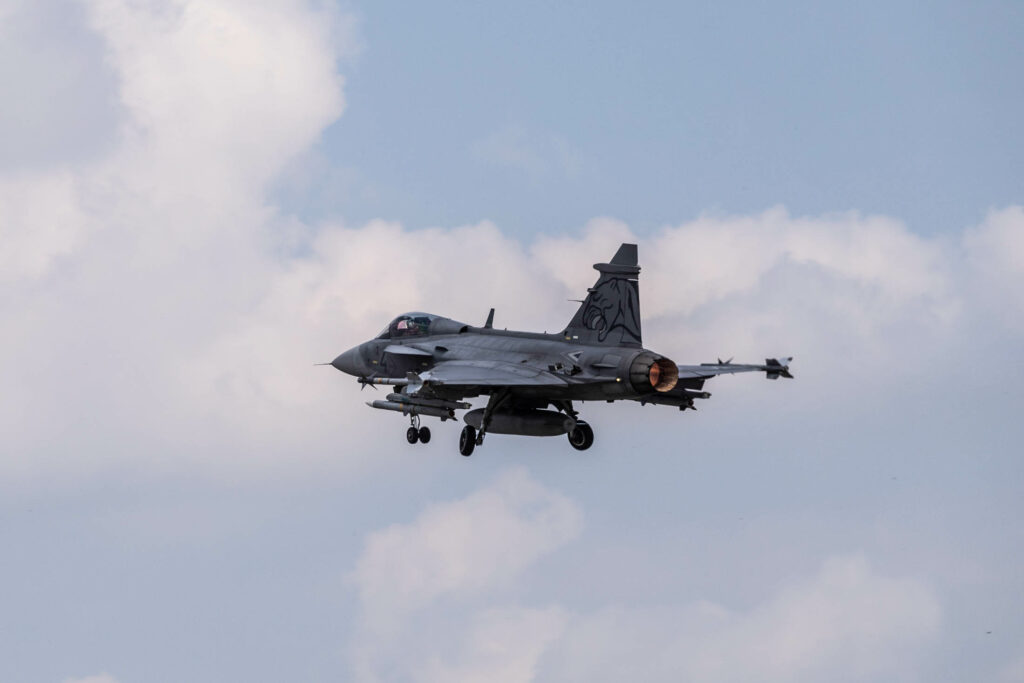
The JAS 39 Gripen is a light, single-engine, multi-role fighter engineered by Saab for the Swedish Air Force.
“JAS” stands for Jakt (fighter), Attack (strike), and Spaning (reconnaissance), reflecting its versatility across multiple mission profiles.
Designed for cost-effective operation, the Gripen blends advanced avionics, a delta-wing configuration, and fly-by-wire controls to deliver high maneuverability, short-field takeoff capability, and rapid mission adaptability.
Over the decades, it has evolved into one of the most capable lightweight multi-role fighters in Europe.
How It Came to Be
During the 1970s, Sweden sought to replace aging aircraft like the Saab 35 Draken and Saab 37 Viggen.
The challenge was clear: create a single platform capable of multiple roles, operate from dispersed and short airfields, and remain affordable for a small air force.
Sweden needed one aircraft that could handle air superiority, ground attack, and reconnaissance, while still operating from short stretches of highway with minimal ground crews and constrained budgets.
Saab’s solution was the JAS 39 Gripen, which combined lessons from previous aircraft.
From the Draken, engineers retained a focus on agility and air defense performance. From the Viggen, they adopted lessons in short-field operations and rugged undercarriage design.
Gripen went further, introducing digital fly-by-wire controls, a relaxed-stability airframe for enhanced maneuverability, and an integrated avionics architecture that allowed rapid software upgrades.
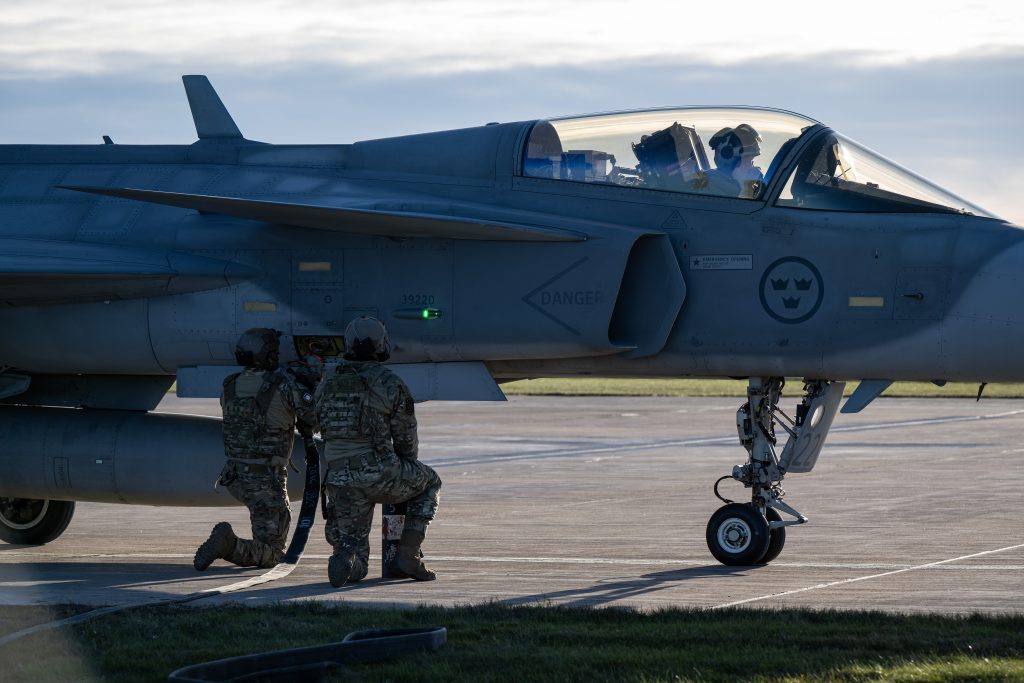
Where earlier aircraft required larger crews and complex support infrastructure, the Gripen was built for efficiency. It could be quickly turned around by a small ground team and refueled and rearmed in minutes. Its modular electronics also reduced lifecycle costs and made modernization easier.
The aircraft first flew in 1988 and entered service in 1997.
Variants
While the Gripen retains its core design philosophy, each variant reflects Sweden’s shifting operational needs.
From Cold War air defense to modern network-centric warfare, here’s how the versions stack up:
| Category: | JAS 39A/B: | JAS 39C/D: | JAS 39E/F: |
| Entry Into Service | 1997 | Early 2000s | 2020s |
| Primary Role | Multi-role (fighter/attack/recon) | NATO-compatible multi-role | Advanced multi-role / network-centric warfare |
| Upgrade Focus | Replaced Draken/Viggen | NATO interoperability | Extended range, AESA radar, increased payload, network warfare |
| Length | 14.1 meters (46.3 feet) | 14.1 meters (46.3 feet) | 15.2 meters/49.9 feet (stretched fuselage) |
| Wingspan | 8.4 meters (27.6 feet) | 8.4 meters (27.6 feet) | 8.6 meters (28.2 feet) |
| Maximum Takeoff Weight | ~14,000 kilograms (30,864 pounds) | ~14,000 kilograms (30,864 pounds) | ~16,500 kilograms (36,376 pounds) |
| Engine | Volvo RM12 (based on GE F404) | Volvo RM12 | GE F414G (more powerful) |
| Combat Radius | ~800 kilometers (500 miles) | ~800 kilometers (500 miles) | ~1,300 kilometers/ 807 miles (increased internal fuel) |
| Radar | PS-05/A mechanically scanned radar | Improved PS-05/A Mk3 | Raven ES-05 AESA radar |
| Avionics | Early digital avionics suite | NATO datalink, improved EW | Advanced sensor fusion, new EW suite |
| Hardpoints | 8 | 8 | 10 |
| Armament | AIM-9, AIM-120, Maverick, bombs | Expanded NATO weapons integration | Meteor BVRAAM, IRIS-T, Taurus KEPD 350, Mk82 bombs, precision-guided munitions |
| Aerial Refueling | No | Yes | Yes |
| Cockpit | Early glass cockpit | Improved glass cockpit, HMD | Large-area wide display (WAD), modern HMD |
How It Works
Key Features
- Multi-role flexibility: Switches between fighter, strike, and reconnaissance missions seamlessly.
- Compact and agile: Delta wing and canard configuration provide excellent maneuverability and short-field capability.
- Advanced sensors: AESA radar (in E/F models), electronic warfare suite, and datalink for networked operations.
- Modern cockpit: Glass cockpit with intuitive controls and helmet-mounted displays (HMD) in the later variants.
Strengths
- Cost-effective: Lower operating and maintenance costs compared to other modern fighters.
- Short runway operations: Can operate from dispersed road bases for resilience in wartime.
- Networked warfare ready: Integrated sensors and datalinks allow interoperability with allies.
- Export success: Adopted by several countries, including South Africa, Brazil, and the Czech Republic.
Limitations
- Payload constraints: Smaller airframe limits heavy weapons loads compared to larger fighters.
- Single-engine: While reliable, offers less redundancy than twin-engine fighters.
- Range limits: Smaller internal fuel capacity limits unrefueled endurance compared to that of strategic fighters.
Global Use and Operational Deployment
The Gripen has proven itself in peacekeeping missions, NATO exercises, and regional air defense operations.
Countries like Brazil, Colombia, South Africa, and Thailand operate the Gripen for multi-role defense, while Sweden maintains a dispersed network of bases for rapid deployment.
Its compact design allows operations from austere airfields, making it an ideal fighter for countries with limited infrastructure.
Future Outlook
The Gripen continues to evolve with software upgrades, new weapons, and improved sensors.
The JAS 39E/F models expand operational reach with AESA radar, extended range, and enhanced interoperability with NATO and allied systems. Sweden is also on the lookout if satellite launching is possible with the aircraft.
Its combination of affordability, agility, and multi-role capability ensures the Gripen remains relevant for both small and medium air forces for decades to come.