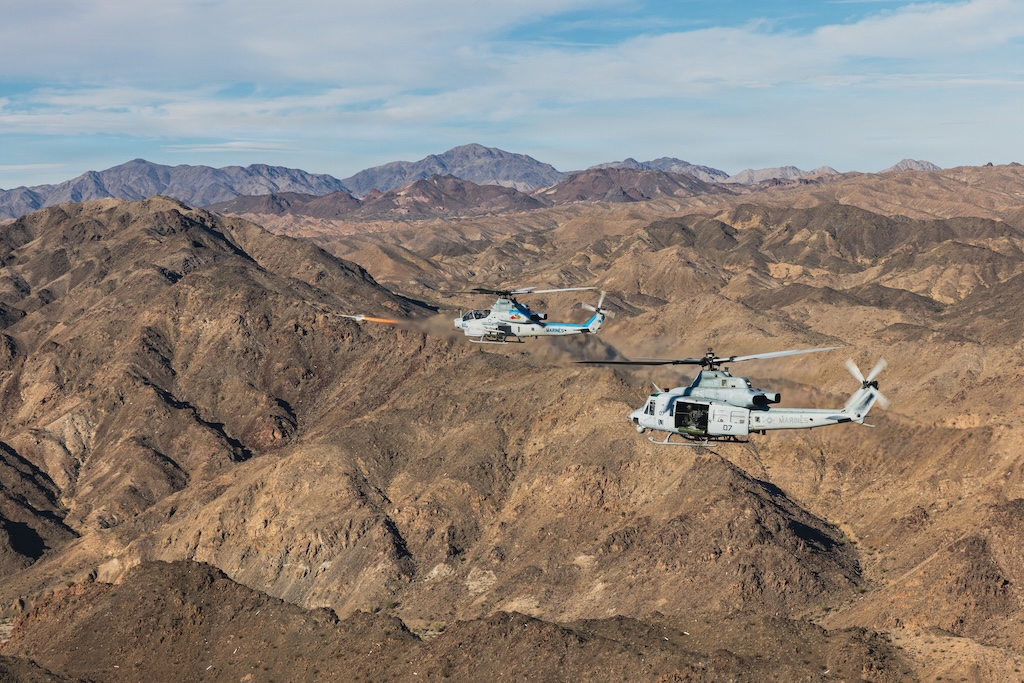

It started with a simple idea: let a missile chase heat the way a predator tracks its prey. That concept turned into one of the most enduring weapons in modern air combat: the AIM-9 Sidewinder.
Decades after its first flight, it remains mounted under the wings of frontline fighters, evolving with each generation of aerial warfare.
Here’s how the Sidewinder became a cornerstone of dogfighting, and why it continues to define short-range engagements today.
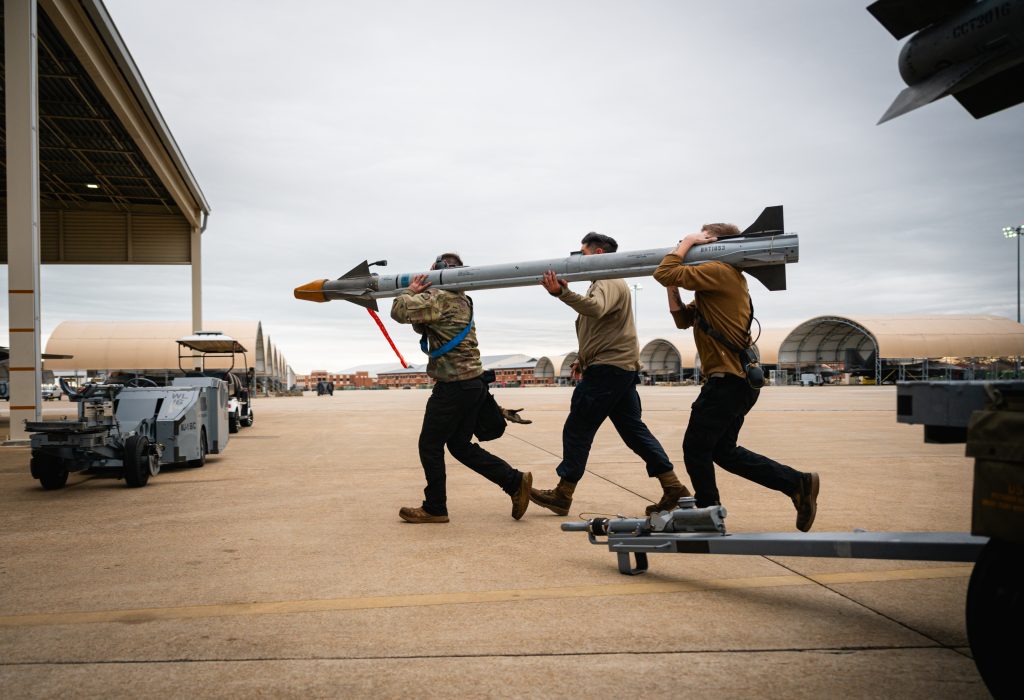
What Is the AIM-9 Sidewinder?
The AIM-9 Sidewinder is a short-range, infrared-guided air-to-air missile developed by the US Navy, built for the split-second demands of within-visual-range combat.
Rather than relying on radar, it locks onto a target’s heat signature and pursues it at high speed and with agility, allowing pilots to fire and break away almost immediately.
Over decades of continuous upgrades, the Sidewinder has evolved from a rear-aspect missile into an all-aspect, highly maneuverable weapon, now integrated across a wide range of Western and allied aircraft.
Its combination of simplicity, reliability, and adaptability has made it one of the most enduring and widely deployed air-to-air missiles in service.
| Category: | Details: |
| Type | Short-range, infrared-guided air-to-air missile |
| Role | Within-visual-range air combat and short-range interception |
| Developer | US Navy |
| Manufacturer | Raytheon |
| Guidance System | Infrared homing/imaging infrared seeker |
| Propulsion | Solid-propellant rocket motor |
| Warhead Type | Annular blast-fragmentation |
| Length | 9.9 feet (3.02 meters) |
| Diameter | 5 inches (12.7 centimeters) |
| Launch Weight | 186 pounds (84.4 kilograms) |
| Speed and Range | Classified |
| Key Features | High off-boresight targeting, thrust vectoring, infrared counter-countermeasures, and lock-on-after-launch capability |
| Compatible Aircraft | F-15, F-16, F/A-18, F-22, F-35, and other allied fighter aircraft |
| Launch Modes | Air-to-air and surface-launch configurations |
Origins and Development
The Sidewinder’s origins date back to the early 1950s at the Naval Ordnance Test Station in California. Engineers pursued a revolutionary concept: a passive infrared homing missile that could guide itself after launch.
Key milestones:
- 1956: First operational deployment (AIM-9B)
- 1960s to 70s: Extensive combat use in Vietnam
- 1980s to 90s: Major upgrades in seeker and maneuverability
- 2000s to present: Introduction of the advanced AIM-9X
Over time, development transitioned through companies, including Raytheon, which continues to produce modern variants.
Variants of the Sidewinder
The Sidewinder helped transform air combat by making heat-seeking missiles practical at scale, shifting dogfighting away from gun-only engagements toward missile-centric aerial combat.
Its evolution is best understood as a steady expansion of what a short-range missile can see. Early versions were constrained by narrow engagement envelopes, but each iteration pushed those limits further.
Introduced in the 1950s, the AIM-9B Sidewinder established the baseline.
It used a simple infrared seeker and was limited to rear-aspect engagements, meaning it could only lock onto the heat signature of an aircraft’s exhaust. While effective for its time, it required pilots to maneuver into very specific firing positions.
The AIM-9L and AIM-9M Sidewinder marked a major leap forward.
These variants introduced all-aspect targeting and improved resistance to infrared countermeasures, which makes them far more versatile in real combat scenarios.
The modern AIM-9X Sidewinder represents a fundamental shift in capability.
It distinguishes targets with far greater precision and allows pilots to engage targets far outside the aircraft’s forward line of sight, transforming the Sidewinder from a pursuit weapon into a highly flexible, close-range combat system.
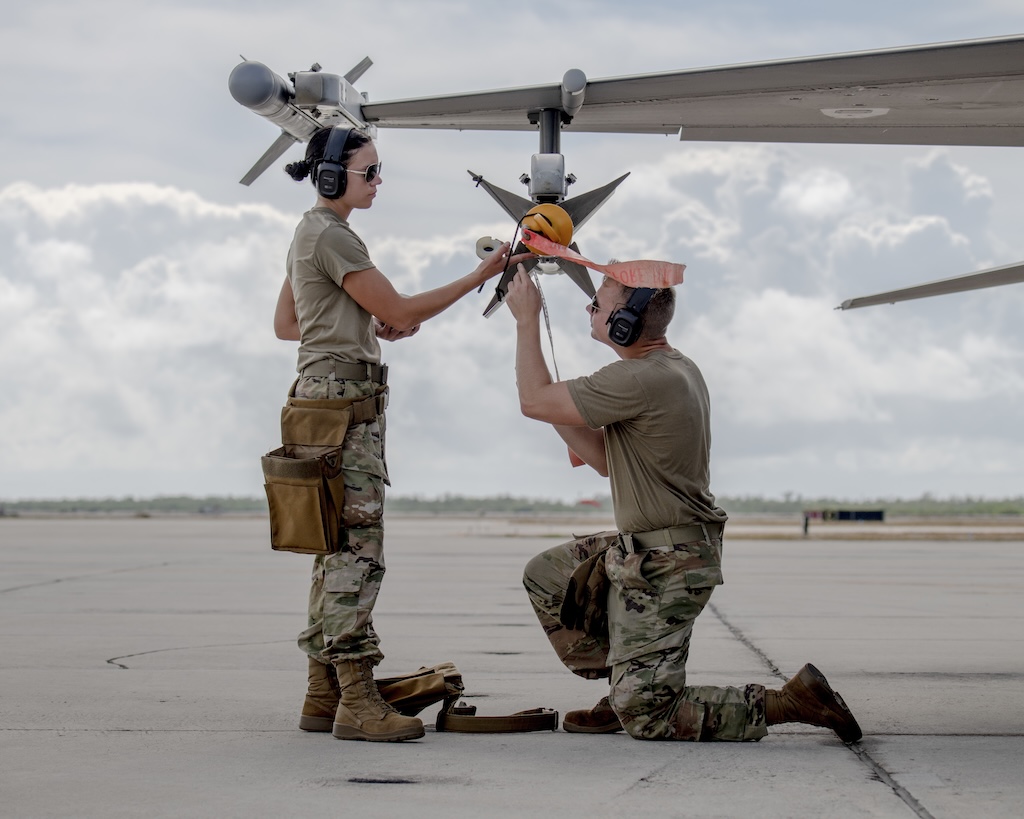
How the Sidewinder Works
The Sidewinder’s effectiveness lies in its simplicity combined with continuous innovation.
Key Features
- Infrared homing seeker tracks heat sources
- Fire-and-forget operation
- Control fins and rollerons for stability
- Proximity fuse and fragmentation warhead
Strengths
- Highly reliable and combat-proven
- Effective in close-range dogfights
- Continuous upgrades keep it relevant
- Compatible with a wide range of aircraft
Limitations
- Limited range compared to beyond-visual-range missiles
- Can be affected by countermeasures (though improved in newer variants)
- Requires target acquisition before launch
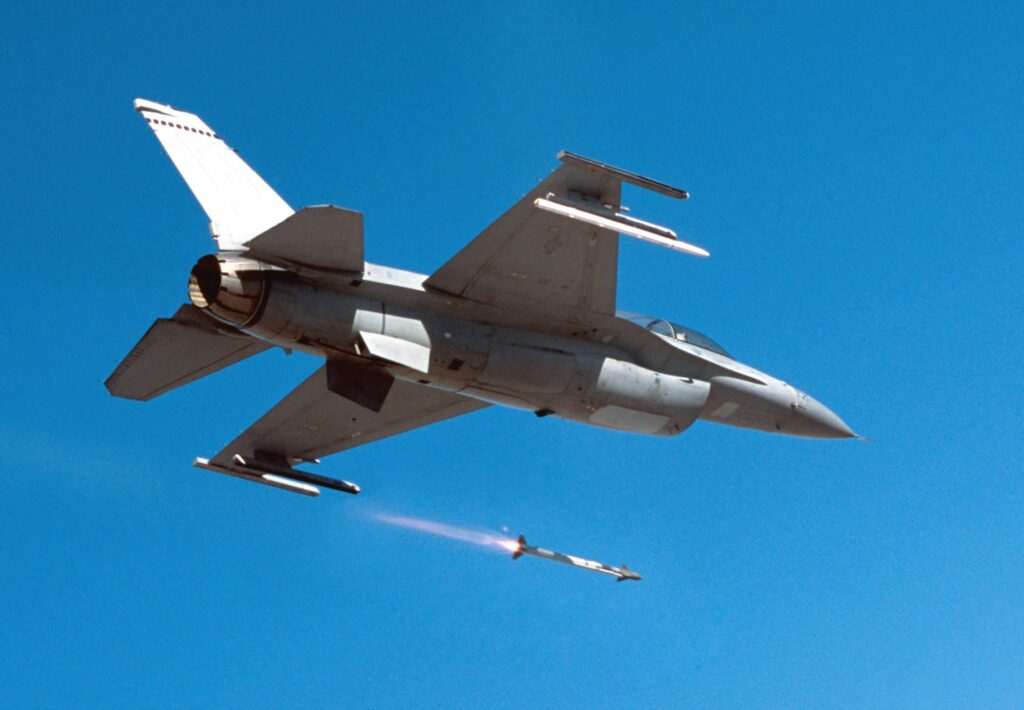
Global Use and Combat Experience
Few missiles have seen as much real-world use as the Sidewinder.
Combat History
- Vietnam War: Extensive air-to-air engagements
- Falklands War: British forces achieved notable success with AIM-9L
- Middle East conflicts: Widely used across multiple air forces
- Ukraine conflict: Continued relevance in modern warfare
Global Adoption
The Sidewinder is used by dozens of countries, including Belgium, Poland, Saudi Arabia, and NATO allies, integrated on platforms such as:
Its longevity stems from adaptability and continuous upgrades, rather than replacement.
Future Outlook
The Sidewinder remains far from obsolete. The AIM-9X continues to evolve with:
- Enhanced target discrimination
- Integration with networked warfare systems
- Potential upgrades for counter-drone roles
At the same time, emerging threats, such as stealth aircraft and advanced countermeasures, are pushing further innovation. Rather than being replaced, the Sidewinder is being refined to complement next-generation air combat systems.