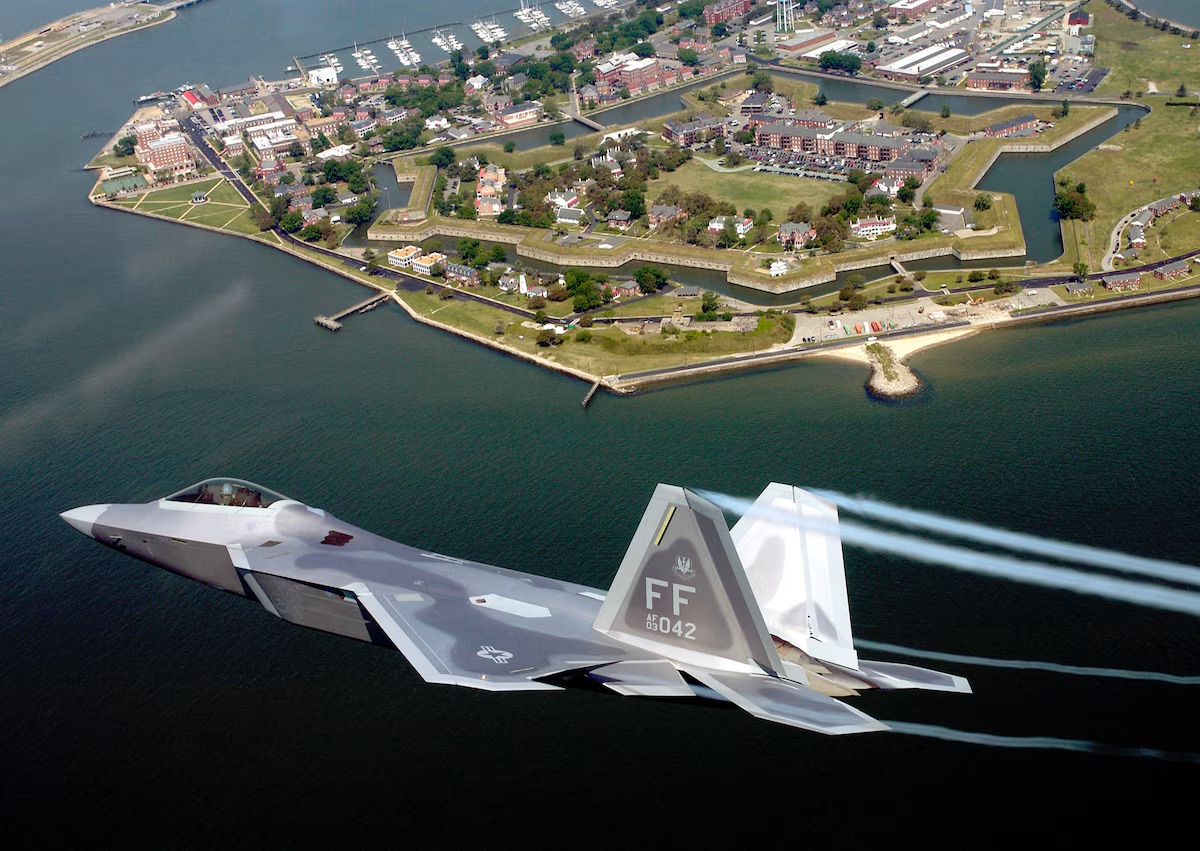

It begins long before the aircraft is ever seen, just a blip on a radar screen that suddenly disappears. By the time an adversary realizes what’s happening, the engagement is already over.
The F-22 Raptor was built for this exact moment: to dominate the skies before a fight even begins.
If air superiority is the foundation of modern military power, the F-22 Raptor stands as its most refined instrument, so let’s take a closer look at the capabilities that make it such a critical asset in today’s battlespace.
What Is the F-22 Raptor?
The F-22 Raptor is a fifth-generation stealth air superiority fighter with a primary mission to establish and control the aerial battlespace through stealth and decisive engagement capabilities.
With Lockheed Martin and Boeing at the helm of development, the multi-role aircraft is a critical component of the Global Strike Task Force and can also conduct ground attack, electronic warfare, and intelligence-gathering missions.
The US Air Force claims that the F-22 cannot be matched by any known or projected fighter aircraft.
| Category: | Details: |
| Type | Multi-role air dominance stealth fighter |
| Developer | Lockheed Martin, Boeing |
| Power plant | 2 Pratt & Whitney F119-PW-100 turbofan engines |
| Thrust | 35,000-pound (15,875-kilogram) class each engine |
| Wingspan | 44.6 feet (13.6 meters) |
| Length | 62.1 feet (18.9 meters) |
| Height | 16.8 feet (5.1 meters) |
| Weight | 43,340 pounds (19,700 kilograms) |
| Maximum Takeoff Weight | 83,500 pounds (38,000 kilograms) |
| Fuel Capacity | Internal: 18,000 pounds (8,200 kilograms); External: 26,000 pounds (11,900 kilograms) |
| Speed | Mach 2 (2,470 kilometers/1,534 miles per hour) |
| Range | 1,850+ miles (2,980 kilometers) |
| Ceiling | Above 15,000 meters (49,200 feet) |
| Armament | 1 x M61A2 20-millimeter cannon (480 rounds), 2 x AIM-9 infrared (heat seeking) air-to-air missiles; 6 x AIM-120 AMRAAM or 2 x GBU-32 JDAMs; and 2 x AIM-120 AMRAAM |
| Crew | 1 |
| Unit Cost | $143 million |
Origins and Development
The F-22 traces its roots to the Advanced Tactical Fighter program launched in 1981 to counter emerging Soviet threats.
The US hungered for a new fighter that could fully exploit emerging upgrades in aircraft design, such as composite materials, advanced flight control systems, and stealth technology.
The YF-22 and YF-23 were the main prototypes competing, with the former model ultimately selected for production in 1991.
By 2004, the F-22 Raptor had moved beyond testing and into full-rate production, officially entering service as the F-22A the following year.
Within a year, it was already flying real-world defense missions and dominating large-scale exercises like Northern Edge.
Against simulated enemy formations, the Raptor consistently outmatched legacy fighters and demonstrated its ability to operate unseen, unchallenged, and largely untouched.
How the F-22 Raptor Works
Stealth and Survivability
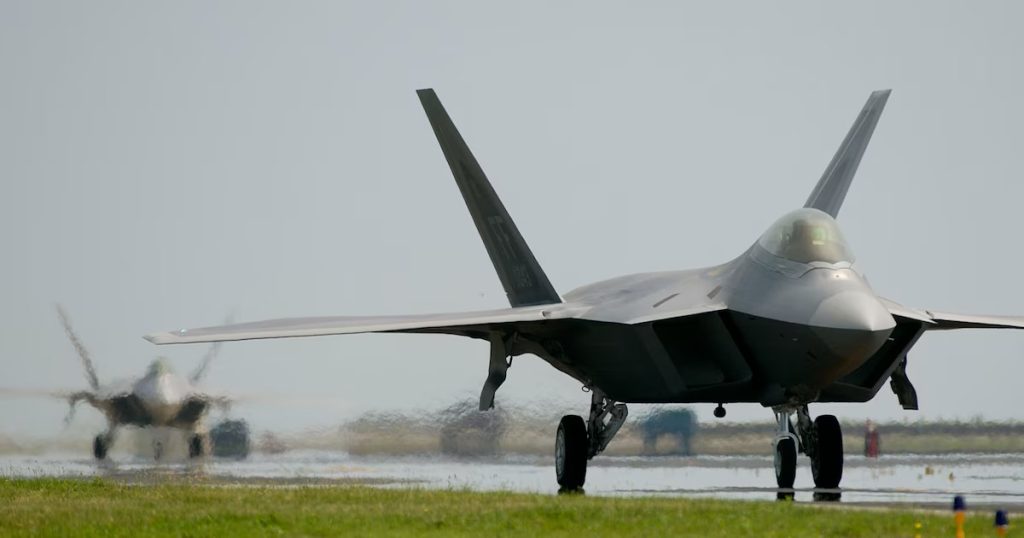
The F-22’s design minimizes radar cross-section through shaping, coatings, and internal weapons bays. This allows it to operate undetected in contested environments, striking before adversaries can react.
Supercruise and Performance
Unlike most fighters, the F-22 can sustain supersonic flight without afterburners—a capability known as supercruise. Combined with thrust-vectoring engines, it achieves exceptional speed, agility, and energy retention in combat.
Sensor Fusion and Avionics
The aircraft integrates data from multiple onboard sensors into a single, coherent picture for the pilot. This sensor fusion allows the pilot to detect, track, and engage threats before being detected.
Strengths
- Air superiority dominance: Designed to defeat advanced enemy fighters
- Stealth advantage: Difficult to detect, track, and engage
- High performance: Combines speed, agility, and advanced aerodynamics
- Situational awareness: Sensor fusion provides unmatched battlefield clarity
Limitations
- High cost: Expensive to produce and maintain
- Limited fleet size: Small production run constrains availability
- Aging airframes: Requires ongoing upgrades to stay relevant
- Export restrictions: Not available to allied nations
Global Context and Use
The F-22 has been deployed in multiple operational theaters, including the Middle East, where it conducted airstrikes and provided air cover during operations against extremist groups. While no other nation operates the F-22, peer competitors such as China and Russia have developed their own fifth-generation fighters, such as the Chengdu J-20 and Sukhoi Su-57, aiming to challenge US air superiority.
Future Outlook
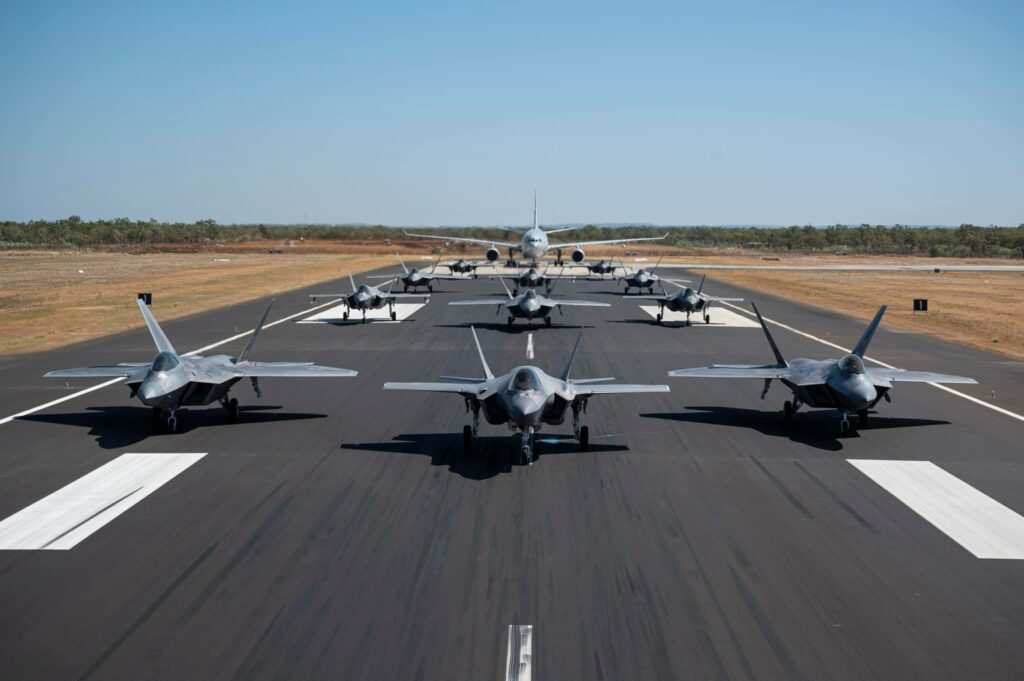
Although production has ended, the F-22 Raptor is far from obsolete.
Ongoing modernization efforts continue to enhance its software, sensors, weapons, and electronic warfare capabilities, ensuring it remains effective against evolving threats.
It is expected to eventually be complemented and then replaced by the Next Generation Air Dominance program, but that transition will take time.
The F-22 was built to guarantee air superiority in an era where losing control of the skies was no longer an option.
More than two decades later, it still defines what that dominance looks like. But with production long closed and rivals catching up, the real question is how long that edge can last.