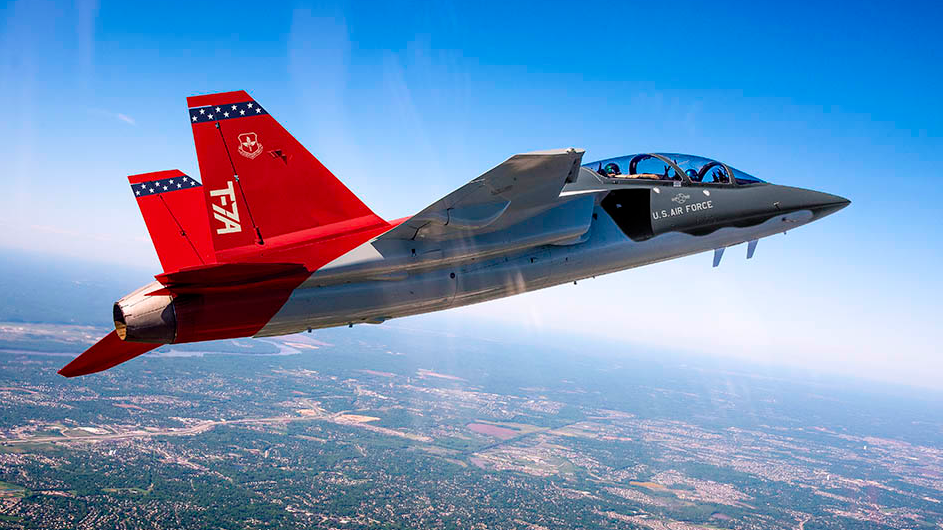

Modern air combat doesn’t start in combat; it starts in training. As fifth-generation fighters grow more complex, legacy trainer aircraft can no longer prepare pilots for the systems and decision-making required in frontline operations.
The T-7A Red Hawk was designed to fix that gap. A next-generation jet trainer, it brings advanced cockpit systems and digital training into pilot development.
Here’s how the T-7A Red Hawk came to be and why it represents a fundamental shift in preparing pilots for today’s air combat.
At a Glance
| Category: | Details: |
| Type | Next-generation advanced pilot training aircraft |
| Role | Advanced pilot training for fighter and bomber pilots |
| Manufacturer | Boeing and Saab |
| Power Plant | 1 x General Electric F404-GE-103 afterburning turbofan |
| Maximum Thrust | 17,600 to 18,000 pounds (7,983 to 8,165 kilograms) with afterburners |
| Length | 47.7 feet (14.5 meters) |
| Height | 13.7 feet (4.2 meters) |
| Gross Weight | 21,000 pounds (9,525 kilograms) |
| Fuselage | 4,500 pounds (2,041 kilograms) |
| Wingspan | 30.6 feet (9.3 meters) |
| Speed | Mach .95 (1,173 kilometers/729 miles per hour) |
| Maximum Altitude | 45,000 feet (13,716 meters) |
| Range | 990 nautical miles (1,833 kilometers/1,139 miles) |
| Unit Cost | $19,000,000 (2025) |
| Crew | 2 (student and instructor) |
| 2025 Inventory | Active force: 351 Air National Guard: 0 Reserve: 0 |
What Is the T-7A Red Hawk?
The T-7A Red Hawk is a next-generation trainer developed for the US Air Force to replace the aging T-38 Talon and prepare pilots for fifth-generation combat aircraft like the F-22 Raptor and F-35 Lightning II.
Developed by Boeing in partnership with Saab, the Red Hawk combines modern cockpit systems, digital engineering, and integrated simulation to streamline the path from student pilot to mission-ready aviator.
Origins and Development
The T-7A program emerged from the US Air Force’s T-X competition launched in 2015 to replace the aging T-38 Talon.
Boeing and Saab won the contract in 2018, and the aircraft was officially designated the T-7A Red Hawk the following year.
Since then, the program has progressed through flight testing and production scaling throughout the 2020s, with the aircraft designed from the ground up to reduce training gaps between legacy jets and modern combat platforms through digital integration, safety improvements, and lifecycle efficiency.
Training Architecture
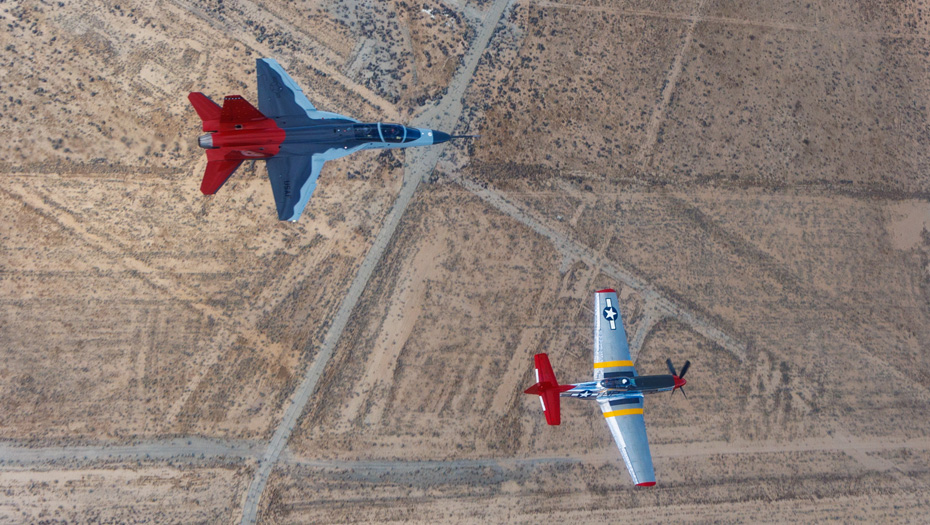
While the T-7A is a single aircraft platform, its training ecosystem is designed around both live flight and integrated simulation.
T-7A Production Variant
- Primary advanced trainer for US Air Force pilots
- Replaces T-38 in Undergraduate Pilot Training
Ground-Based Training Integration
- High-fidelity simulators
- Mission rehearsal systems
- Integrated pilot performance tracking
This combined approach allows pilots to transition seamlessly from simulator to cockpit.
How the T-7A Red Hawk Works
The Red Hawk is built around digital-first training architecture and modern aerodynamic design.
Key Features
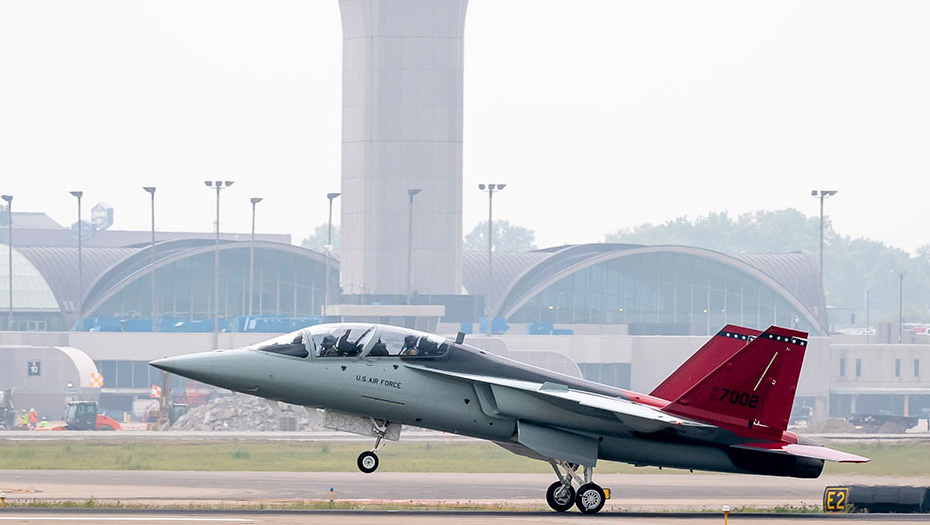
The T-7A Red Hawk features a digital-first cockpit featuring large-area displays and an advanced glass-cockpit layout that mirrors frontline fighter systems.
It uses a fully fly-by-wire flight control system that delivers precise handling and supports high-angle-of-attack performance, giving trainees a fighter-like flying experience.
Its avionics architecture is modular, allowing for future upgrades as training requirements evolve, while built-in simulation integration enables a blended training environment that seamlessly connects ground-based instruction with in-flight experience.
Strengths
- Designed specifically for 5th-generation fighter preparation
- Lower maintenance burden compared to legacy trainers
- Highly responsive handling for combat-style training
- Integrated digital training ecosystem reduces overall training time
- Improved safety systems and ejection survivability
Limitations
- Testing identified problems with the emergency escape system
- Limited combat capability (not a strike platform)
- Dependent on broader training infrastructure for full effectiveness
- Procurement and production delays
Training Impact and Operational Role
The T-7A is more than an aircraft; it is the centerpiece of a restructured pilot training pipeline.
Key Roles
The T-7A Red Hawk serves as the foundation for how future aviators progress through the US Air Force training pipeline.
It then bridges the critical transition to frontline fighter aircraft by introducing pilots to modern systems and operational complexity earlier in their training.
Beyond this, it supports advanced handling and combat maneuver training, replicating the demands of high-performance combat aviation.
These roles are reinforced through integrated simulator-based mission rehearsal, which links virtual and live environments to build readiness more efficiently and consistently.
Operational Significance
The aircraft is designed to reduce the “training gap” that occurs when pilots move from basic trainers to high-performance fighters. Its digital ecosystem allows instructors to replicate combat scenarios with high realism before pilots ever enter operational squadrons.
Future Outlook
As combat aircraft become more software-driven and operational environments more complex, pilot training is evolving alongside them.
The Boeing T-7A Red Hawk is designed for that shift, combining live flight, simulation, and digital integration into a single training ecosystem — an approach now moving closer to operational scale with recent contracts pushing for production.
Planned future developments include:
- Expanded simulator and AI-driven training systems
- Increased fleet production to replace legacy T-38s
- Potential export interest from allied air forces
- Continuous avionics and software upgrades
More than just a replacement for the T-38, the Red Hawk represents a broader transformation in how future fighter pilots are prepared for modern air combat.